
A 5-Minute Guide to Cosmetic Packaging Materials
August 30, 2026
As the cosmetics industry has grown at breakneck speed, competition among brands has become fiercer than ever. Many companies aren't just perfecting their formulas — they're pouring just as much thought into their packaging.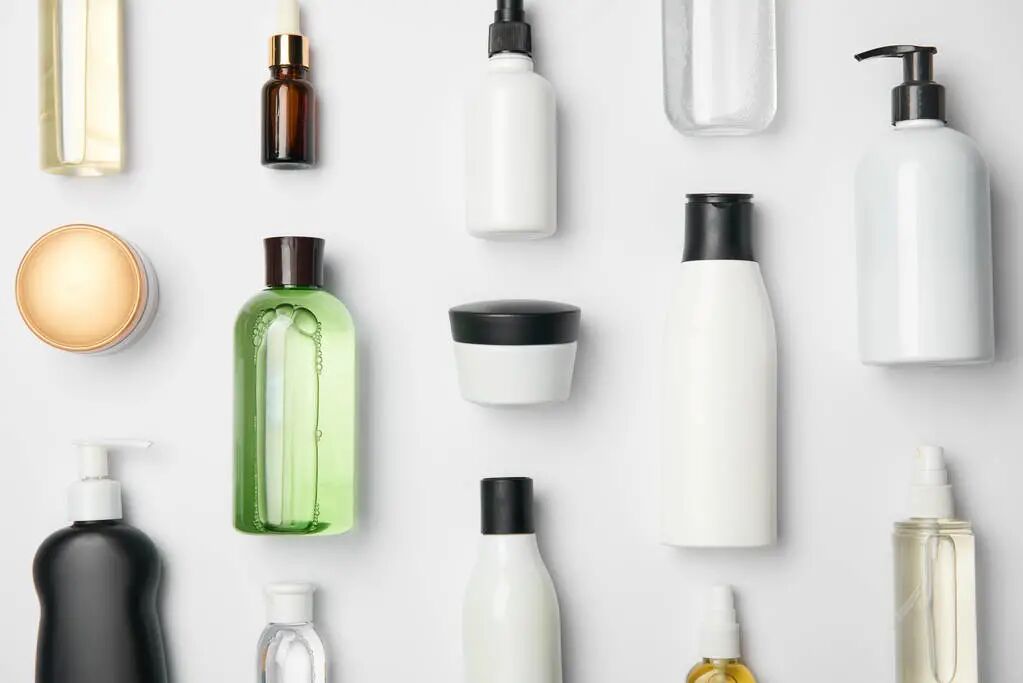
Novel, elaborate packaging designs seem to appear constantly, and a striking outer box or bottle design has become almost essential to a product's commercial success. But packaging does far more than catch a shopper's eye. For the formula itself, packaging provides indispensable storage and protective functions. Cosmetic packaging isn't limited to the container — it also covers outer shipping boxes, inner cartons, labels, and various accessories. Skincare packaging in particular varies enormously, since formulas differ so widely in texture and form. That's exactly why choosing the right packaging materials matters so much in production.
Understanding Packaging Materials
Packaging materials fall into two categories: primary (inner) packaging and secondary (outer) packaging. Primary packaging generally refers to the bottle body itself (glass, plastic, etc.), caps, inner pouches, tubes, and similar components — the specifics depend on the product. Secondary packaging generally refers to the outer box, shrink wrap, and so on. Printing, craftsmanship, and specifications all vary, and pricing naturally follows suit.
Common Primary Packaging Materials
Common primary packaging materials for cosmetics include plastic bottles, glass bottles, and tubes. Each material has its own characteristics, making it suited to different textures and formulations.
Plastic Bottles
Plastic bottles come in several materials, including PET (polyethylene terephthalate), PP (polypropylene), PE (polyethylene), AS (acrylonitrile styrene), and acrylic.
PET: Highly transparent with some flexibility — it can be squeezed slightly but is firmer than PP. PET is an eco-friendly material with strong barrier properties, light weight, shatter resistance, and good chemical resistance. Its excellent clarity means it can also be produced in pearlescent, colored, frosted-white, or clear finishes, making it a popular choice for toners and other liquid products. Bottle necks are usually standard 16mm, 18mm, 22mm, or 24mm, and can be fitted with pump heads.
PP: Softer and easier to squeeze than PET, though less transparent — which is why opaque shampoo bottles often use PP (it's easier to dispense from).
PE: Essentially opaque and not as smooth as PET. PP and PE are fairly similar to one another; both are food-safe, eco-friendly materials that can come into direct contact with cosmetic or food ingredients. Both have a somewhat whitish, semi-translucent appearance and are commonly used for filling organic skincare products.
Acrylic: Thick and rigid, acrylic is the material that most closely resembles glass. It's injection-molded and has relatively poor chemical resistance, so it generally can't hold formula directly — an inner liner is required as a barrier. Filling shouldn't be too full, to prevent product from seeping between the liner and the acrylic shell and causing cracking. It also demands more careful packaging during shipping, since scratches show up very visibly. Acrylic has high clarity, feels notably thick-walled, and comes at a higher price point.
AS: Not especially hard and somewhat brittle, but with good transparency. It's safe for direct contact with cosmetics and food, and is commonly used for lotion bottles and vacuum-pump bottles.
Glass Bottles
In cosmetics, glass bottles are mainly used for smaller-volume products like creams, balms, lotions, serums, and facial oils. Based on the opening style, glass bottles fall into wide-mouth and narrow-mouth types. Wide-mouth jars are typically used for creams and other spreadable balm-type products, while narrow-mouth bottles are generally used for liquid toners and lotions. Glass bottles are usually paired with caps, pump heads, or droppers to help keep the product clean and hygienic. The bottle surface can be frosted, spray-coated, or screen-printed. The advantage of glass is its low production cost; the drawbacks are its weight and fragility. Perfumes commonly use glass bottles, since glass better prevents evaporation and preserves the fragrance.
Plastic Tubes
Tubes come in single-layer, double-layer, and five-layer constructions depending on barrier needs, and can be made from plastic or metal — plastic tubes, typically PE, are by far the most common, used for everyday products like facial cleansers. Tube packaging offers excellent sealing, keeping out air while preventing contents from leaking. Barrier performance differs depending on the number of layers. Tubes are usually paired with screw caps or flip-top caps, and the tube body can be screen-printed and finished in various ways.
Special Packaging for Special Ingredients
Some cosmetic ingredients are inherently unstable and require special packaging to preserve their activity. Amber glass bottles, vacuum pumps, metal tubes, and ampoules are the most common solutions.
Amber (Dark) Glass Bottles
Light-sensitive ingredients in cosmetics can oxidize under UV exposure, potentially losing effectiveness — or even becoming irritating or toxic. Ascorbic acid and ferulic acid, for example, are prone to photo-oxidation, while retinol derivatives and furanocoumarins are both photosensitive and phototoxic. To prevent these ingredients from breaking down under light, packaging must block light exposure — typically through dark, opaque glass, with deep brown being the most common choice. For convenience and hygiene, amber glass bottles are often paired with droppers. Brands built around active, functional ingredients frequently use amber glass to ensure their formulas stay effective.
It's worth noting that while dark glass is chosen primarily to block light, that's not always the only reason — some brands use it purely for tradition or aesthetics. Even when a formula contains no light-sensitive ingredients, brands may still choose amber bottles and droppers because of their long association with pharmaceutical products, appealing to consumers on that basis alone.
Vacuum Pumps
While amber glass blocks light effectively, it only seals out air up until the point of first use — it isn't suited to ingredients that need stronger, ongoing air exclusion (such as antioxidants like ubiquinone and ascorbic acid) or oils prone to oxidation (like shea butter). When a formula demands tighter sealing, a vacuum pump is the better choice. Vacuum pumps are usually made from AS material, with the key advantage of thoroughly isolating the contents from outside air. Inside the pump, a piston at the base of the bottle moves upward each time the pump is pressed, dispensing product while the internal volume shrinks — so no air is drawn back in.
Metal Tubes
Because vacuum pumps are made of plastic, they don't block light particularly well. When a formula needs both strong light protection and airtight sealing — as with high-concentration retinol products — metal tubes are the answer. High-concentration retinol products are typically packaged in aluminum tubes, which offer tighter sealing than plastic, along with light-blocking and moisture resistance, better preserving the activity of the contents.
Ampoules
Ampoules have become one of the hottest primary packaging trends in cosmetics in recent years, prized for their excellent sealing and safety. The concept was borrowed from the medical industry's glass ampoules. Ampoules seal active ingredients in an airtight, single-use format, keeping out air and contaminants and ensuring product hygiene. Glass ampoules can also be tinted dark for effective light protection. Products packaged through aseptic filling in single-use ampoules can often skip preservatives altogether, giving consumers with highly sensitive skin — or those who simply prefer to avoid preservatives — a welcome alternative.
Storing Products According to Their Ingredients
While primary packaging helps preserve a product's stability and the activity of its functional ingredients, consumers still need to follow storage instructions after purchase to further extend shelf life. Products with special requirements — needing protection from direct sunlight, or storage in a dry place, for example — will have this noted on the outer packaging.
Many active ingredients in cosmetics are fairly unstable, and product properties can shift under high or low temperatures. Actives such as retinoids, peptides, and enzymes may discolor or lose potency at high temperatures and are better stored cool. That said, an unstable ingredient doesn't necessarily mean the finished product is unstable. Before a product goes to market, formulators have already accounted for a range of conditions, using the formulation itself and the packaging to maintain overall stability. So looking at a single ingredient in isolation — without considering the full formula — and deciding on your own to refrigerate or heat a product can actually backfire.
If room temperature is too low, some watery or purely oil-based formulas may freeze or crystallize; and if a formula contains very little emulsifier, low temperatures can cause it to separate. In these cases, gently warming the product, or simply storing it at a more suitable temperature, is the right fix.
Packaging Testing
Whether packaging is clean and free of visible defects can be checked with the naked eye. But properties like air-tightness, capacity, pump-actuation durability, print adhesion, leak resistance, and drop resistance all require formal testing, with results documented in a test report.
Regulatory Requirements
Does passing testing and looking elegant mean the packaging is in the clear? Not quite — packaging is also subject to national regulations. This year, China's State Administration for Market Regulation revised and issued the mandatory national standard Requirements for Restricting Excessive Packaging of Goods — Food and Cosmetics, and excessive packaging will now face stricter penalties. Chanel, Gucci, Guerlain, and Dior have all previously been cited — or even penalized — for over-packaging.
"Excessive packaging" refers to packaging that exceeds standards for void ratio, number of layers, or packaging cost. Generally, outer packaging may not exceed three layers, the void ratio for a 50mL cosmetic package may not exceed 30%, and packaging cost may not exceed 20% of the product's retail price. Online tools are available to calculate a cosmetic package's void ratio.
Printing Techniques
Screen printing: Produces a visibly raised, textured finish. Regularly shaped (cylindrical) bottles can be printed in a single pass; irregular shapes are charged per section, and each color is billed separately. There are two ink types — air-dry ink, which tends to wear off over time and can be removed with alcohol, and UV-cured ink, which has a distinctly raised texture and is much harder to remove.
Hot stamping (foil stamping): A thin foil layer is stamped onto the surface, so it lacks the raised texture of screen printing. It's best avoided directly on PE and PP materials — a heat-transfer step is usually needed first, unless high-quality stamping foil is used, in which case direct stamping is possible.
Water transfer printing: Carried out in water, producing an irregular, non-uniform pattern; it's also more expensive.
Heat transfer printing: Commonly used for high-volume runs with complex designs. It works by applying a film layer to the surface and tends to be pricier.
Offset (pad) printing: Mainly used on aluminum-plastic and all-plastic tubes. If offset printing is being used to create a white finish on a colored tube, screen printing must be used instead, or the underlying color will show through. Offset-printed tubes are sometimes finished with a glossy or matte film overlay.
Coloring Techniques
Hot-stamping foil (electrolytic aluminum foil): A stamping material made by coating and vacuum-depositing a metal foil layer onto a thin film base.
Electroplating: Produces a glossy, bright finish compared with spraying.
Spray coating: Produces a matte, muted finish compared with electroplating.
Frosting: Gives the surface a matte, sandblasted texture.
Packaging and Brand Building
Packaging is a brand's silent salesperson — a great packaging design is like a great salesperson. If you want your brand to stand out from the crowd, your packaging needs a distinctive, original design. Cosmetic packaging with its own color palette and signature design has proven to be genuinely important in the market — these details are what set a product apart from the competition. In the end, winning over customers and building a brand both hinge on getting cosmetic packaging design right.